
Last updated July 10, 2026
Air Duct Cleaning Maintenance Checklist for Youngstown Homeowners
Here’s the uncomfortable truth most duct cleaning companies won’t tell you: the generic “clean every 3 to 5 years” advice printed on furnace stickers was written for a climate that doesn’t exist in Northeast Ohio. In Youngstown, where gas furnaces run hard from October through April and our older housing stock includes everything from 1920s bungalows in Wick Park to mid-century ranches in Boardman, that one-size-fits-all timeline is costing homeowners money and air quality they don’t even know they’re losing. After 17 years of crawling through attics, basements, and crawl spaces across Mahoning County, we’ve learned that a maintenance checklist only protects your investment when it’s built around how you actually live — your pets, your renovation history, your heating fuel, and whether your ductwork runs through a damp Youngstown basement.
Quick Answer
A proper air duct cleaning maintenance checklist for Youngstown homeowners includes monthly filter checks and register visual inspections, seasonal furnace filter replacements and basement humidity monitoring, and professional duct cleaning every 2 to 4 years depending on pets, smoking, recent renovations, and whether you heat with gas or oil. Homes with forced-air systems running 6+ months annually, common in Youngstown’s climate, accumulate debris faster than manufacturer guidelines suggest.
Table of Contents
- Why Maintenance Intervals Matter More in Youngstown
- Monthly Maintenance Tasks
- Seasonal Maintenance Tasks
- Annual Maintenance Tasks
- How to Do a Basic Self-Inspection at the Register
- Furnace Filter MERV Ratings and Duct Debris
- Documenting Your Duct System Over Time
- Youngstown-Specific Triggers for Unscheduled Inspections
Why Maintenance Intervals Matter More in Youngstown
Youngstown sits in a unique spot climatically and architecturally. Our 38 to 42 inches of annual precipitation, combined with freeze-thaw cycles that stress foundation seals, means basement moisture is a constant battle for homeowners from Liberty Township to Poland. When ductwork runs through damp conditions, the microbial load in your system changes — and standard manufacturer timelines from drier climates become irrelevant.
Then there’s the heating reality. Most Youngstown homes rely on natural gas forced-air furnaces that operate 180+ days per year. In our experience, that’s nearly double the runtime of comparable systems in milder climates. More runtime means more air volume passing through ducts, more filter loading cycles, and more opportunities for debris to redistribute through the system.
The age of our housing stock matters too. Homes built before 1980, which represent a significant portion of Youngstown’s neighborhoods, often have original galvanized ductwork or early flex-duct installations that weren’t designed for today’s higher-static HVAC equipment. These older systems have more seams, more potential for leakage, and more places for debris to accumulate outside the main trunk lines.
What this means practically: a homeowner on the South Side with a 1960s ranch, two dogs, and a gas furnace needs a fundamentally different checklist than the same checklist suggests for a newer build in Canfield. The tiered approach below accounts for these variables.
Monthly Maintenance Tasks
Monthly tasks are about observation, not deep cleaning. They take 10 minutes and create the early warning system that prevents expensive surprises.
- Visually inspect supply registers in every room. Remove the vent cover and look inside with a flashlight. You’re checking for visible debris accumulation on the duct walls beyond the register boot — a light coating of dust is normal; clumps, hair mats, or dark staining are not. In Youngstown’s older homes, we often find register boots packed with construction debris from decades ago because no one’s ever looked.
- Check your furnace filter’s condition. Don’t just note whether it’s dirty — note how quickly it loaded. A filter that was clean 30 days ago and is now gray and clogged indicates high particulate load in your home or duct leakage pulling in unfiltered air. Mark the installation date on the filter frame with a permanent marker.
- Listen to your system’s startup and runtime sounds. New whistling, rattling, or airflow changes at specific registers can indicate duct blockage or disconnected runs. In Youngstown’s pier-and-beam basements, we’ve seen duct sections separate entirely when settling occurs after wet seasons.
- Note any persistent odors when the system first kicks on. A musty smell that dissipates after a few minutes often signals microbial growth in the evaporator coil or condensate pan — common in our humid summers when AC systems work overtime.
- Check basement humidity if your ductwork runs below grade. Use a basic hygrometer. Readings consistently above 60% warrant dehumidifier consideration, especially in neighborhoods like Smoky Hollow or the lower-lying sections of Struthers where water tables run high.
Seasonal Maintenance Tasks
Seasonal tasks align with Youngstown’s heating and cooling transitions — typically mid-September and mid-April — when you’re switching system modes and already thinking about HVAC.
- Replace the furnace filter regardless of apparent condition. Even filters that look acceptable have reduced media integrity after a full heating or cooling season. For Youngstown’s long heating runs, we see better system performance when homeowners don’t push filters beyond seasonal replacement.
- Inspect the return air pathway. Return grilles pull air from your living space and are often located in hallways or central areas. Remove the grille and vacuum the cavity behind it — this is where pet hair, carpet fibers, and large debris collect first. In homes near Mill Creek Park’s wooded areas, we’ve found surprising pollen and leaf particulate accumulation here.
- Verify condensate drainage before AC season. Youngstown’s summer humidity creates substantial condensate. A clogged drain line backs water into the system, creating conditions for microbial growth that spreads through ductwork. Pour a cup of water down the drain access — it should flow freely to the floor drain or pump.
- Check duct insulation in unconditioned spaces. Basement and crawl space ductwork with damaged insulation creates condensation points in summer and heat loss in winter. Fiberglass insulation that’s fallen away or become moisture-stained needs professional attention — it’s both an efficiency and air quality issue.
- Test smoke and CO detectors. Not strictly duct maintenance, but in Youngstown’s older housing with original or modified duct systems, combustion safety and duct integrity are connected. A cracked heat exchanger or backdrafting issue often reveals itself through CO migration patterns that proper duct maintenance helps you notice.
Annual Maintenance Tasks
Annual tasks require more time and sometimes basic tools, but they’re still within capable homeowner range.
- Perform a full register removal and cleaning. Soak metal registers in warm water with mild detergent, scrub with a brush, and dry completely before reinstallation. Plastic registers can warp — clean in place with a damp cloth. This isn’t duct cleaning; it’s removing the debris source that would otherwise re-enter the system.
- Inspect accessible ductwork in basement or utility areas. Look for disconnected joints, visible gaps at seams, and rust or corrosion on metal ductwork. In Youngstown, we regularly find separations at flex-duct connections where vibration and thermal cycling have loosened clamps. A disconnected return duct in a basement is pulling unfiltered, potentially mold-laden air directly into your system.
- Clean the blower compartment if accessible. Turn power off at the breaker, remove the blower panel, and gently vacuum visible debris from the squirrel cage and housing. Don’t disturb wiring or balance weights. This is where much of your system’s particulate load settles — the blower re-aerosolizes it with every cycle.
- Document findings with dated photos. See the dedicated section below on documentation — this annual checkpoint is your baseline comparison opportunity.
- Schedule professional HVAC maintenance. A technician should inspect the heat exchanger, measure system static pressure, and verify refrigerant charge. High static pressure often indicates duct blockage or undersized returns — problems that accelerate debris accumulation and reduce filter effectiveness.
How to Do a Basic Self-Inspection at the Register
Homeowners often ask us what they should realistically be able to assess themselves versus what requires our camera systems and rotary brushes. Here’s the honest boundary: you can see enough to know when to call, but you can’t see enough to diagnose the full system condition.
What you can do without tools:
- Remove the register cover and shine a flashlight into the duct boot — the short section connecting your floor or wall to the main duct run. Look for visible debris, standing water, or insect/rodent evidence. In Youngstown’s older homes near wooded lots, we’ve found everything from mouse nesting to hornet colonies in these boots.
- Check for black staining around register edges. This indicates filtration soiling — your system’s airflow pattern is pulling particulate through gaps between the register and ceiling/wall, then depositing it as a shadow. It’s cosmetic but signals air leakage that bypasses your filter.
- Feel for consistent airflow. Hold a tissue near each register with the system running — significant variation between rooms suggests blockage, damper issues, or duct separation.
- Smell for persistent odors. Musty, chemical, or combustion smells that localize to specific registers indicate problems in that branch line.
What’s normal and not concerning:
A light dust coating on duct walls — the kind that wipes off with a finger — is normal accumulation between professional cleanings. A thin gray film is not a health hazard and doesn’t indicate system failure. What concerns us: clumped debris, standing moisture, visible mold growth (typically dark spotting with irregular edges), or rodent droppings. These conditions warrant professional inspection with camera equipment and, if confirmed, mechanical cleaning with equipment like our Rotobrush systems or Nikro extraction units.
Furnace Filter MERV Ratings and Duct Debris
This is where well-meaning homeowners often create new problems. Upgrading to a higher-MERV filter without understanding the system interaction is like putting a finer screen on a funnel — it catches more, but it can also choke flow and increase duct leakage.
MERV 8 filters capture basic pollen and dust mites — adequate for homes without significant allergen concerns. MERV 11 adds pet dander and finer particulate. MERV 13 and above capture bacteria and smoke particles but create substantially more static pressure resistance.
In Youngstown’s older homes with original ductwork, we’ve measured static pressure increases of 0.3 to 0.5 inches water column when homeowners upgrade from MERV 8 to MERV 13 without system modification. That added resistance forces more air through duct leaks — often in unconditioned basements — and can actually increase the debris load in your living space while overworking the blower motor.
The complete fix requires three coordinated actions:
- Select the highest MERV rating your system can handle without exceeding manufacturer static pressure limits — typically MERV 11 for older systems, MERV 13 for newer variable-speed equipment.
- Increase filter change frequency when you upgrade. A MERV 13 filter loads faster and becomes a restriction point sooner. In Youngstown’s heating season, that might mean monthly rather than quarterly replacement.
- Address duct leakage before or simultaneously with filter upgrades. Sealing accessible joints with mastic or professional aerosol sealing ensures the air you’re filtering actually reaches your living space rather than leaking into the basement.
We’ve seen too many homeowners in Boardman and Austintown install premium filters, feel good about the upgrade, and never realize their ducts are leaking 20% of conditioned air into crawl spaces. The filter is only as good as the system integrity behind it.
Documenting Your Duct System Over Time
This is the practice almost no one does — and it’s the single biggest advantage you can give yourself when you eventually call a professional or sell your home.
Create a simple digital or physical folder with dated entries for:
- Annual photos of representative registers and any accessible ductwork. Shoot the same register from the same angle each year. Visual comparison reveals gradual changes you’d never notice day-to-day.
- Filter change dates and brands used. Track which MERV ratings you’ve run and how quickly they loaded. This data helps technicians recommend appropriate upgrades without guessing.
- Professional service records. Note who performed the work, what equipment they used, and what they found. If a previous company used rotary brush systems versus compressed air, that affects what subsequent cleaning should involve.
- Any moisture events. Basement flooding, roof leaks near duct chases, or condensate backups — all create conditions that accelerate microbial growth and may warrant more frequent inspection.
- Renovation dates and scopes. Even “dustless” remodeling generates particulate that finds its way into returns. Document when work occurred so you can correlate any air quality changes.
When Mark Thompson arrives for a consultation, homeowners who can show two years of dated photos and service history get a more precise assessment in less time. We can focus on what’s changed rather than establishing baseline from zero. In neighborhoods like Cornersburg or West Boulevard where we’ve worked repeatedly, this documentation also helps us track whether local soil conditions or construction practices are affecting systems similarly.
Youngstown-Specific Triggers for Unscheduled Inspections
Certain events in our area should prompt immediate professional duct assessment outside normal maintenance intervals:
- Post-renovation, especially in pre-1978 homes. Youngstown’s lead paint legacy means older home renovations carry elevated risk. Even with proper abatement, lead dust is tenacious. If your contractor didn’t isolate and pressurize correctly, your duct system may have become the distribution network for hazardous particulate.
- Basement flooding or sustained dampness. The Mahoning River watershed and our clay-heavy soils create hydrostatic pressure issues in many neighborhoods. Water in basement ductwork — even if it recedes — leaves behind organic material that supports mold growth. We’ve cleaned systems in Struthers and Campbell where homeowners didn’t realize their ducts had been submerged during a previous owner’s occupancy.
- Fuel conversion — oil to gas or vice versa. Different combustion characteristics produce different particulate signatures. Oil-to-gas conversions often leave residual soot in ductwork that becomes re-entrained. The switch itself is also when homeowners often discover previously hidden duct problems.
- Persistent allergy symptoms that correlate with system runtime. Youngstown’s tree pollen season (April-May) and ragweed season (August-September) are predictable. If symptoms persist outside these windows or worsen specifically when the blower runs, duct contamination is a likely contributor.
- New pet acquisition or multiple pets. Pet dander loads increase non-linearly — two dogs produce more than double the dander of one due to behavioral interaction. We’ve measured significantly higher debris loads in homes with multiple pets, especially breeds with continuous shedding cycles.
- Home purchase in an estate or foreclosure situation. Unknown maintenance history means unknown duct conditions. In our experience, these properties often have filters that haven’t been changed in years, if ever.
Common Mistakes to Avoid
- Following the furnace sticker blindly. That “3 to 5 years” recommendation assumes average use in average conditions. Youngstown’s heating season length and older housing stock are not average conditions.
- Using the wrong filter for your system. A MERV 13 filter in a 1980s furnace with a standard blower motor creates more problems than it solves. Match filter to system capability, not marketing claims.
- Ignoring return air pathways. Homeowners obsess over supply registers (where air blows out) but neglect returns (where air gets pulled in). Returns are typically dirtier and more consequential for system loading.
- DIY compressed air “cleaning.” We’ve repaired duct damage from homeowners who shoved shop vac hoses or compressed air wands into ductwork without understanding pressure dynamics. Flex duct tears easily; metal duct seam separation is common. Visual inspection is appropriate DIY; mechanical cleaning requires proper equipment and training.
- Assuming new construction means clean ducts. Construction debris in new ductwork is a well-documented problem. Drywall dust, wood particles, and even fastener debris accumulate during build-out. We’ve cleaned ducts in new Canfield builds that were worse than 30-year-old systems.
- Neglecting the dryer vent. Clogged dryer vents create backpressure that can affect overall household airflow patterns and introduce lint particulate into living spaces. Dryer Vent Cleaning in Youngstown is part of complete system maintenance.
- Waiting for visible dust at registers. By the time debris is visible at supply registers, the system has already distributed significant particulate. Register dust is a late indicator, not an early warning.
When to Call a Professional
Call for professional assessment when your self-inspection reveals any of the following: visible mold growth, rodent or insect evidence, standing water or chronic moisture, disconnected or damaged duct sections, or persistent odors you can’t source. Also call when you’ve experienced any of the Youngstown-specific triggers listed above — post-renovation, basement flooding, fuel conversion — even if you don’t yet notice symptoms.
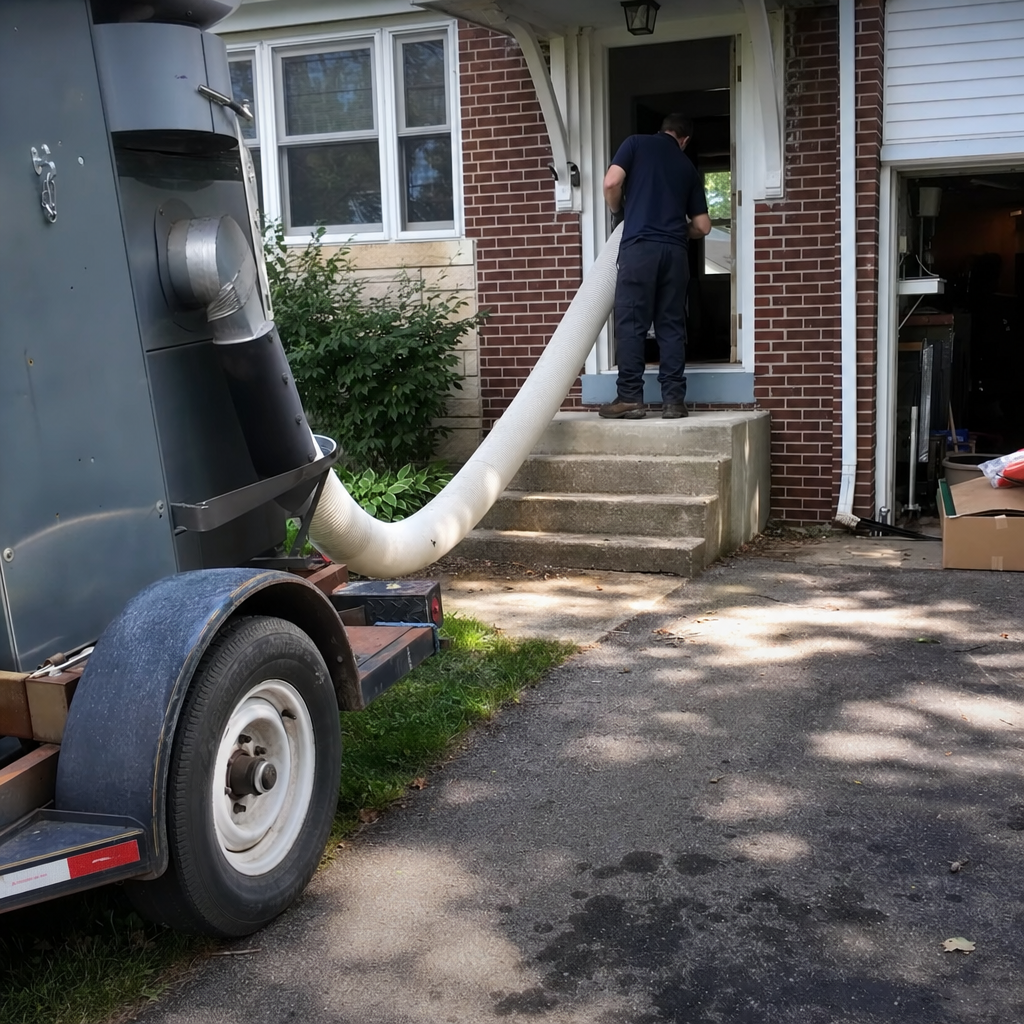
Professional duct cleaning involves mechanical agitation and negative-pressure extraction — equipment like our Rotobrush rotary brush systems and Nikro high-powered vacuums — combined with camera inspection to verify results. It’s not a maintenance task for homeowner tools.
Coastal Air Duct & Vent Cleaning Greater Youngstown offers free estimates in Youngstown — call (866) 952-5794. Mark Thompson handles your job personally — owner on-site, every time. With 17 years and 661 reviews, the track record speaks for itself. From cleaning to repair to sealing, one call covers the full job.
Frequently Asked Questions
Most Youngstown homes need professional air duct cleaning every 2 to 4 years, shorter than generic guidelines suggest due to our extended heating season and older housing stock. Homes with multiple pets, recent renovations, or basement moisture history should lean toward the 2-year interval. Call (866) 952-5794 for a free assessment of your specific situation — estimates are free.
You can and should perform monthly visual inspections and register cleaning, but mechanical duct cleaning requires professional equipment. Rotary brush systems and negative-pressure extraction units like our Rotobrush and Nikro equipment reach deep into duct runs without damaging flex duct or dislodging connections. DIY compressed air or shop vac methods often create more damage than cleaning. For anything beyond register-level maintenance, call a trained technician.
Moderately, but not dramatically. Clean ducts restore designed airflow, which can improve system efficiency 5% to 15% in cases of significant blockage. The bigger energy impact comes from sealing duct leaks — something we assess during every cleaning. In Youngstown’s older homes with basement duct runs, leakage into unconditioned space is often the larger efficiency thief than internal debris.
Visible mold in ducts appears as irregular dark spotting — green, black, or brown — on duct walls, typically near moisture sources. Musty odors that intensify when the system runs are another indicator. However, definitive identification requires laboratory analysis of sampled material. We don’t guess; if we suspect microbial contamination during inspection, we recommend appropriate testing before any cleaning protocol. In Youngstown’s humid summer conditions, we see elevated moisture-related issues in basement duct runs from May through September.
Filters catch a portion of airborne particulate, but they don’t address debris already in the system or accumulation between the filter and registers. Over years, even with excellent filter discipline, fine particulate settles in duct runs and gets re-entrained during system cycling. Think of it like vacuuming your carpet — regular vacuuming helps, but periodic deep extraction still removes embedded material. For homes in Youngstown’s pollen-heavy neighborhoods near Mill Creek Park, this settled particulate includes seasonal allergens that filters alone won’t eliminate.
Proper air duct cleaning addresses the complete system: supply trunk lines, branch ducts, return pathways, and register boots — not just the visible vent covers. At Coastal Air Duct & Vent Cleaning Greater Youngstown, we also inspect and clean the blower compartment and evaporator coil as needed, since these components redistribute debris into “cleaned” ducts if neglected. Our Air Duct Cleaning in Youngstown service includes full-system assessment with camera verification, not just surface-level vacuuming.
The Bottom Line
A maintenance checklist only protects what it’s designed to protect. For Youngstown homeowners, that means acknowledging our climate reality — long heating seasons, basement moisture challenges, and housing stock that predates modern duct standards — and building maintenance intervals accordingly. Monthly observations catch problems early. Seasonal tasks align with system transitions. Annual documentation creates the baseline that turns every professional visit into targeted problem-solving rather than exploratory guesswork. And when local triggers hit — renovation, flooding, fuel conversion — the checklist adapts immediately, not on some arbitrary calendar. The homeowners who get the most from their duct systems aren’t necessarily the ones who spend the most; they’re the ones who match maintenance to actual conditions.
Written by Mark Thompson, Owner & Lead Technician at Coastal Air Duct & Vent Cleaning Greater Youngstown, serving Youngstown since 2009.