
How Often to Clean Air Ducts in Youngstown, OH: The Real Interval Is Set by Your House, Not a Calendar
Most homes in Youngstown need Air Duct Cleaning services every 3 to 5 years if they’ve been continuously occupied and well-maintained. But for the majority of houses we actually work on in this market—older properties with vacancy histories, renovation work, or original mid-century ductwork—the right interval is event-based, not calendar-based: clean after any change of occupancy, any renovation that opens walls, any confirmed rodent activity, or any return to use after a vacancy period, then reassess from there. If you’d rather have a technician evaluate your specific system, call Coastal Air Duct & Vent Cleaning Greater Youngstown at (866) 952-5794 for a free, no-pressure assessment.
Why the “3–5 Years” Rule Breaks Down in Youngstown Housing
The standard 3-to-5-year guideline was written for a house in the suburbs that has been lived in continuously since it was built. It was not written for a 1934 double on the South Side that had three owners since 2010 and sat empty between two of them. For that house, the interval is: clean it now, then reassess.
Youngstown’s housing stock doesn’t match the assumptions behind national guidelines. The dominant homes here are 1910s–1940s brick and frame worker housing built for steel and manufacturing employees, with ductwork that is original or was converted from coal or oil gravity systems to forced air sometime around the 1950s or 1960s. These conversions frequently left soot deposits inside trunk lines and often created undersized duct runs that trap debris and are harder to access with standard cleaning equipment. In many of these homes, the “last cleaning” may have never happened at all—the interval question becomes moot when the system has been circulating the same particulate load for sixty years.
We’ve pulled Rotobrush agitation brushes through ductwork in Brier Hill homes and come up with material that predates the moon landing. That’s not hyperbole. It’s coal-era soot layered with decades of dust, and in properties that went through the Mahoning County Land Bank, it’s often compounded by rodent nesting debris and insulation fragments from prolonged abandonment. Technicians working these properties commonly find mouse nesting material layered over steel-era coal soot—a combination that signals the home sat cold and open for multiple winters before resale.
Mark Thompson, our owner and lead technician, grew up on Youngstown’s West Side and has spent seventeen years inside these systems. His field heuristic is straightforward: if the furnace filter is visibly dirty within 4–6 weeks of replacement, the duct system is actively contributing to that load and the interval should be shortened regardless of when the last cleaning occurred. The filter is telling you what the ducts are circulating.
The Four Event Triggers That Reset Your Cleaning Clock
If you’re wondering Is Air Duct Cleaning Worth It? (Youngstown, OH), we tell homeowners and property managers to stop thinking in years and start thinking in events. Any one of these four triggers means you should schedule a cleaning now, even if your ducts were supposedly done two years ago—or twenty.
- Change of occupancy, especially after vacancy. Properties that sat empty for months or years—common in neighborhoods affected by decades of population loss since the 1977 steel mill closures—accumulate contaminants no occupied home generates. When the Mahoning County Land Bank reoccupies a property, we routinely find mold colonies, rodent debris, and fragmented insulation that built up during the unheated, uncirculated period.
- Completion of any renovation that opens wall cavities. Even a kitchen remodel or bathroom update that disturbs plaster or drywall sends particulate into the return air paths. In older Youngstown homes with leaky duct seams, that debris doesn’t stay in the room where the work happened.
- Confirmed rodent or pest activity. Mice travel ductwork like highways. Once they’ve nested, the debris remains and circulates until it’s physically removed. We see this most often in homes with basement duct runs that connect to exterior wall cavities—standard construction in the 1920s–1940s stock.
- Return to occupancy after any heating-season vacancy. A home that went unheated through a Youngstown winter develops condensation inside metal ductwork, especially in unfinished basements. That moisture binds dust to duct walls and creates conditions for microbial growth that a simple filter change won’t address.
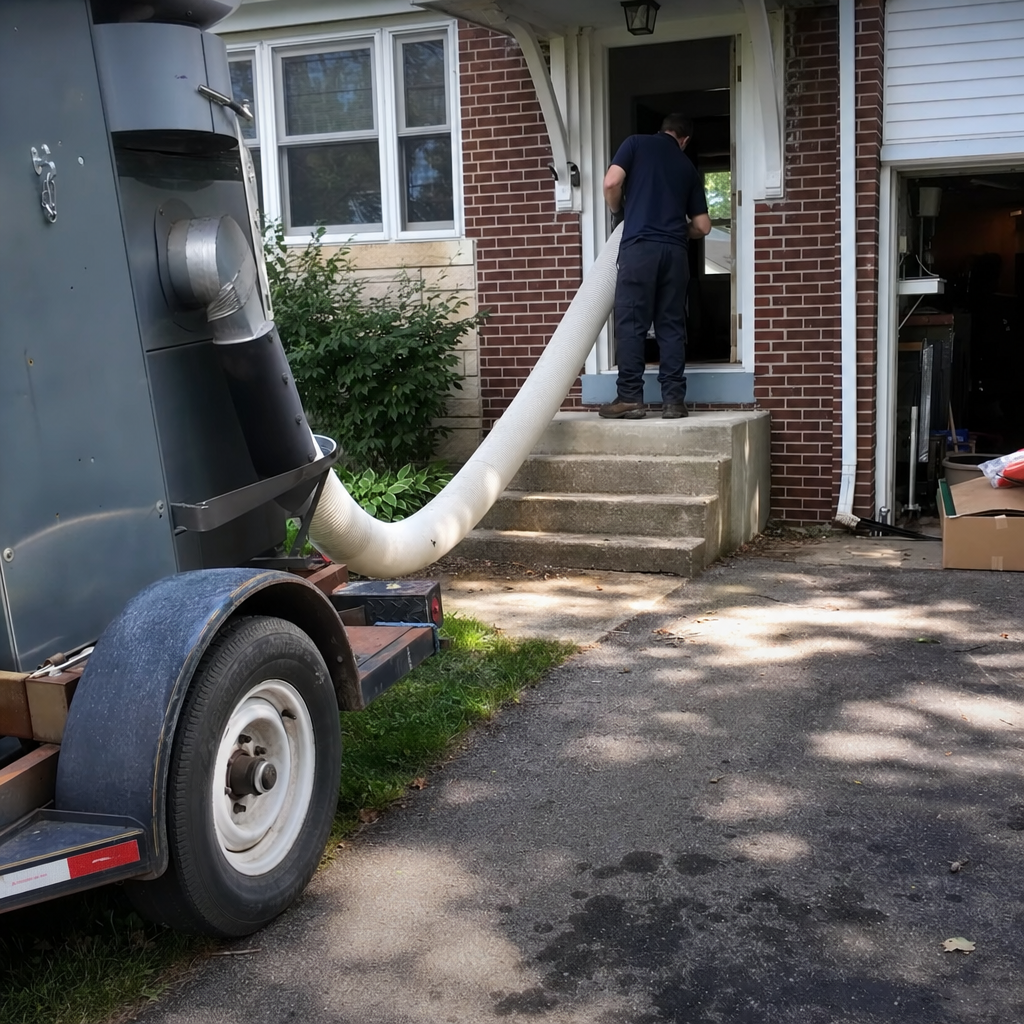
After any of these events, we recommend a full cleaning and inspection with our Nikro extraction system and Abatement Technologies HEPA filtration, followed by a reassessment of your ongoing interval based on what we find.
How Youngstown’s Climate Accelerates Duct Contamination
Though we’re about 75 miles from Lake Erie, Youngstown sits squarely in the lake-effect snow belt. That geography matters for your ducts. We get persistently high winter humidity and frequent freeze-thaw cycles, which promotes condensation inside older, uninsulated ductwork—especially in homes with basement trunk lines that aren’t sealed or wrapped.
Here’s what happens in a typical winter: cold outdoor air infiltrates through gaps in the building envelope, meets the warmer metal of the duct system, and condenses. That moisture binds dust particles to the duct walls more aggressively than in a dry climate. Come spring, those bound particles don’t simply blow out with the next heating cycle. They accumulate in layers, particularly at low points in the duct run and at seams where turbulence drops particulate out of the airstream.
In homes that went unheated during vacancy periods—common in the post-industrial transition neighborhoods—the effect compounds. The ducts get cold, stay cold, and any residual moisture from summer humidity condenses and sits. We’ve opened basement plenums in January and found active mold growth on dust deposits that had been wet-dry cycled for years. The national 3–5 year guideline assumes climate-controlled conditions that simply don’t exist in much of Youngstown’s housing stock.
This is why we don’t give phone quotes based on square footage alone. Mark Thompson handles your job personally—owner on-site, every time—and the first thing he does is inspect the accessible portions of your system to see what the local conditions have actually created.
The Special Case of Pre-1950s Homes That Have Never Been Cleaned
We need to address this directly because it applies to a significant portion of Youngstown’s owner-occupied housing. If your home was built between 1910 and 1945 and has never had professional duct cleaning, the question “how often” is the wrong question entirely. The right question is whether the system contains material that should have been removed decades ago.
The mid-century conversion from gravity heat to forced air in these homes was often done by installers working fast and cheap. Original coal-fired furnaces were swapped for oil or gas units, blowers were added to existing trunk lines, and registers were cut into floors or walls. What didn’t happen, routinely, was thorough cleaning of the existing ductwork. Coal soot contains fine particulate and sulfur compounds that adhere to metal surfaces and don’t simply “blow out” with the new system’s airflow.
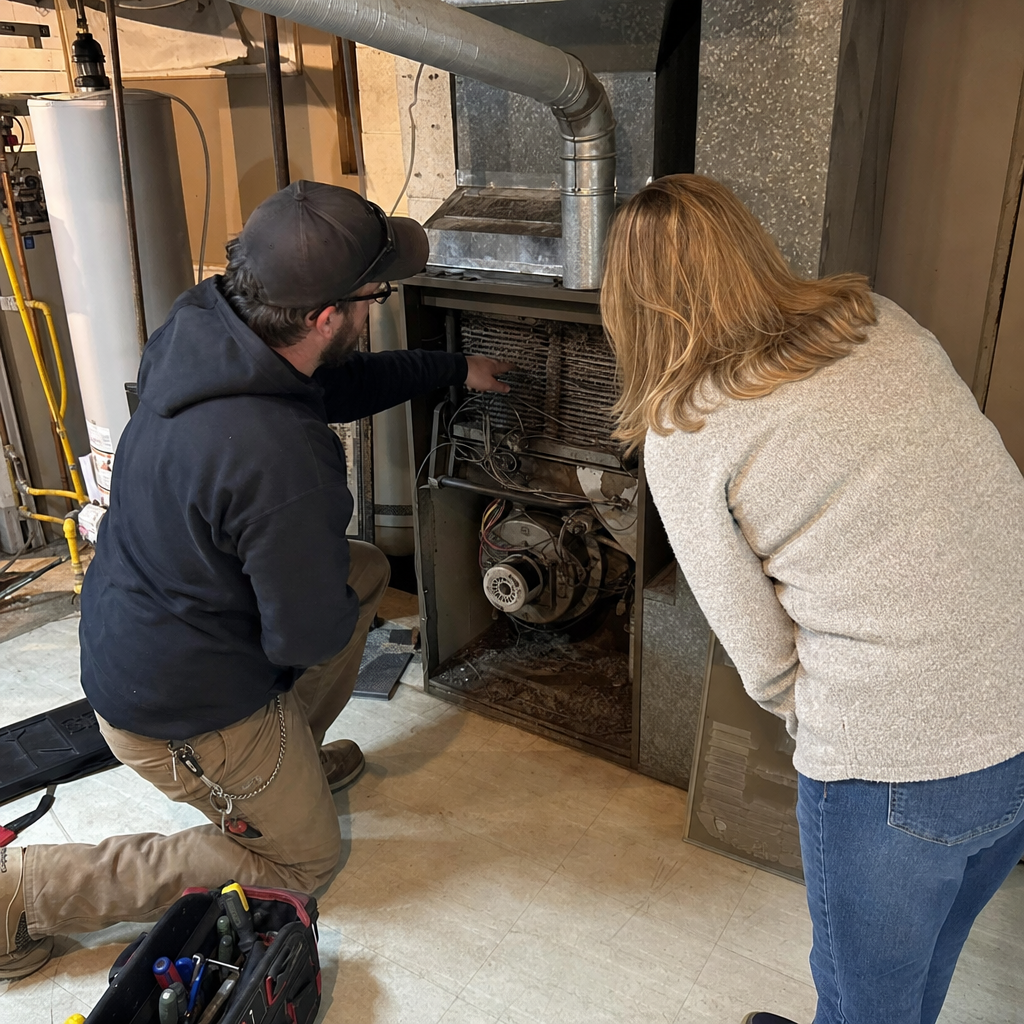
We’ve put camera systems through ductwork in homes on the North Side and found original coal soot still adhering to the upper surfaces of horizontal trunk lines—material that has been recirculating, in some concentration, since the Eisenhower administration. In these cases, we treat the first cleaning as a remediation, not maintenance. Our Rotobrush system with nylon-bristle agitation and simultaneous vacuum extraction is designed to dislodge adhered material without damaging the older, often thinner-gauge metal of these systems.
If you’re unsure whether your home falls into this category, we can usually tell within five minutes of accessing the main trunk line. Seventeen years and somewhere north of two thousand homes in the Mahoning Valley gives you a trained eye for what era of construction left what kind of debris behind.
What a Professional Inspection Reveals That Guidelines Can’t
National cleaning intervals are written for hypothetical average homes. Your home is specific: its duct layout, its leakage rate, its occupancy history, its proximity to industrial particulate sources, and its maintenance record all modify the effective interval. A technician who has seen Youngstown duct systems for 17 years can give a more accurate recommendation than any national guideline.
When Mark Thompson arrives for an assessment, here’s what he actually evaluates:
- Filter loading rate. How quickly does your filter clog? 4–6 weeks means the ducts are contributing significant particulate.
- Visible debris at registers and returns. Heavy accumulation at supply registers often indicates debris being transported, not just settled.
- Duct leakage and pressure imbalance. Leaky return ducts in unconditioned spaces pull in basement or attic air, accelerating contamination.
- Moisture history. Staining, rust, or mold odor in the plenum or trunk lines indicates condensation issues that shorten effective cleaning intervals.
- Prior cleaning documentation. Many homeowners inherit a home with no record of prior service. We treat undocumented systems as unknowns.
This inspection is part of any service visit. We don’t charge separately to look and tell you what we see. If it needs doing, we’ll tell you. If it doesn’t, we’ll tell you that too.
What Professional Duct Cleaning Costs in Youngstown
Whole House Air Duct Cleaning Cost in Youngstown, OH varies with system size, accessibility, and condition, but here’s what Coastal Air Duct & Vent Cleaning Greater Youngstown typically sees in this market:
| Service Scope | Typical Range | Notes |
|---|---|---|
| Standard residential duct cleaning (single furnace, up to 12 vents) | $350 – $550 | Includes supply and return lines, main trunk, registers |
| Older home with heavy debris or first-time cleaning | $500 – $800 | Extended agitation time, possible register removal |
| Post-renovation or post-vacancy cleaning | $450 – $700 | HEPA containment, debris volume often higher |
| Dryer vent cleaning (add-on or standalone) | $125 – $225 | Recommended with duct cleaning for complete service |
| Duct repair/sealing (per job) | $200 – $600 | Mastic sealing, tape replacement, minor patching |
We use professional-grade Rotobrush and Nikro systems, not box-store equipment, and our Abatement Technologies HEPA filtration captures particulate at 99.97% efficiency at 0.3 microns. From cleaning to repair to sealing, one call covers the full job—no referrals to third-party contractors needed.
For Affordable Air Duct Cleaning in Youngstown, OH and an exact quote on your specific system, call (866) 952-5794. Estimates are free, and we’ll show you exactly what we found and what we did—no guesswork, no upsell pressure.
Setting Your Ongoing Schedule After the First Cleaning
Once we’ve cleaned your system and addressed any event triggers, we can establish a rational maintenance interval. For continuously occupied Youngstown homes with no vacancy history, no renovation debris, and no moisture issues, that typically returns to the 3–5 year range. But most homes we serve have at least one modifying factor.
Homes with finished basements and well-sealed ductwork, where the furnace filter loads at a normal 2–3 month rate, can often stretch toward the longer end. Homes with original uninsulated basement trunks, ongoing minor rodent pressure from adjacent vacant properties, or chronic humidity issues may need attention every 2–3 years. Rental properties with tenant turnover should be evaluated at each change of occupancy.
We document what we find and what we recommend, so you have a baseline for future decisions. Seventeen years, 661 reviews—the track record speaks for itself. Our customers know we’ll be straight about whether this year’s visit is necessary or if you can wait.
FAQs
In most pre-1950s Youngstown homes, you should clean the ducts after any change of occupancy, renovation, confirmed pest activity, or return from vacancy—regardless of when they were last serviced—and then reassess based on filter loading and inspection findings. The standard 3–5 year interval assumes modern construction and continuous occupancy, which doesn’t match much of Youngstown’s housing stock. Call (866) 952-5794 for a free evaluation of your specific system.
Yes, a furnace filter that becomes visibly dirty within 4–6 weeks of replacement is a reliable indicator that your duct system is actively contributing particulate to the airflow, and you should shorten your cleaning interval regardless of calendar timing. This is one of the most useful field heuristics we use in Youngstown’s older housing market. If you’re seeing rapid filter loading, we can inspect to determine whether the source is duct debris, duct leakage pulling in unfiltered air, or both.
Absolutely—vacant homes in Youngstown often have the most severe duct contamination we encounter, including rodent nesting debris, mold colonies from unheated winters, and fragmented insulation that circulated into the system through gaps in the building envelope. The Mahoning County Land Bank properties we work are textbook examples: the ducts aren’t just dirty, they’re biologically active in ways that affect indoor air quality for new occupants. We treat these as priority cleanings with full HEPA containment.
Ask for documentation from the seller or check for service stickers on the furnace; if neither exists, assume the system is undocumented and have it inspected, especially in Youngstown’s 1910s–1940s housing stock where original coal-to-forced-air conversions often skipped thorough cleaning. Mark Thompson can typically determine cleaning history within minutes of accessing the main trunk line—seventeen years in these specific systems teaches you what decades of neglect looks like versus a maintained system. Call (866) 952-5794 to schedule a look.
If you’d rather have it looked at, Coastal Air Duct & Vent Cleaning Greater Youngstown offers a no-pressure assessment in Youngstown—call (866) 952-5794 and Mark Thompson will evaluate your system personally, owner on-site, every time.
Written by Mark Thompson, Owner & Lead Technician at Coastal Air Duct & Vent Cleaning Greater Youngstown, serving Youngstown, OH.