
Duct Sealing Cost in Youngstown, OH: What You’ll Actually Pay and What the Job Should Include
Most affordable duct repair and sealing jobs in Youngstown, OH run between $350 and $1,200 depending on the method and the condition of your system. For a typical single-family home with accessible basement ductwork, mastic sealing of visible joints falls in the $350–$650 range, while whole-system Aeroseal runs $1,000–$1,500 or more. Call us at (866) 952-5794 for a free, upfront estimate — Mark Thompson handles every assessment personally, and if your ducts don’t need sealing, he’ll tell you that too.
Why Youngstown’s Ductwork Is Different — And Why That Affects Your Cost
We’ve sealed duct joints in Youngstown homes where the original installer simply crimped a gravity-era trunk line and called it a plenum. Sealing it costs about the same as a standard job. Figuring out why two bedrooms still won’t heat after the seal is the part that requires 17 years of field experience.
The housing stock here tells the story. Most of Youngstown’s neighborhoods — Brier Hill, the South Side, the West Side near where Mark grew up — are packed with 1910s to 1940s brick and frame worker housing built for steel and manufacturing employees. When these homes converted from coal or oil gravity systems to forced air in the 1950s and 60s, the ductwork was often an afterthought. Original trunk lines designed to let warm air drift upward got crimped, screwed, and patched into branch runs that were never properly sized for blower-driven pressure.
That matters for your bill because sealing leaky joints is only half the job. We’ve crawled through basements in homes near Mill Creek Park where the joint between the original trunk and a mid-century branch run was secured with sheet-metal screws and left completely unsealed. The homeowner already paid someone to “seal the ducts” with metal tape. The tape held. The air still poured out through the screw holes and the gap where the crimp didn’t seat properly.
Here’s what we look for that standard sealing quotes miss:
- Gravity-to-forced-air conversion joints that were never engineered for pressure and leak at every mechanical connection
- Undersized branch runs that lose pressure not from leakage but from inadequate diameter — sealing won’t fix this, and we’ll say so upfront
- Lake-effect winter humidity corrosion in uninsulated basement ductwork, where condensation accelerates joint failure and mold growth inside the seam
- Flexible duct sections added during later renovations that have detached from collars or sag below the blower’s designed static pressure
Mark Thompson grew up on Youngstown’s West Side, not far from Mill Creek Park, and after completing his HVAC and mechanical systems program at Youngstown State University’s technical division in the late 90s, he’s spent 17 years inside local ductwork. The converted systems in this market are what most guys won’t touch. We do, but we don’t pretend a seal fixes everything.
Three Ways to Seal Ducts — And What Each Costs in Youngstown
Not every best duct repair and sealing method suits every duct condition. Here’s how the options break down for typical Youngstown homes, with the price ranges we quote after seeing the system.
| Method | Best For | Typical Cost Range |
|---|---|---|
| Mastic compound (brush-applied) | Rigid metal ductwork with accessible joints; standard for mid-century conversions with visible seams | $350–$650 |
| Metal-backed foil tape (UL 181) | Small repairs, temporary fixes, or supplementing mastic at hard-to-brush corners | $150–$300 (add-on or minor repair) |
| Aeroseal aerosol sealant | Whole-system sealing including hidden leaks; flexible duct systems; homes with leakage above 20% | $1,000–$1,500+ |
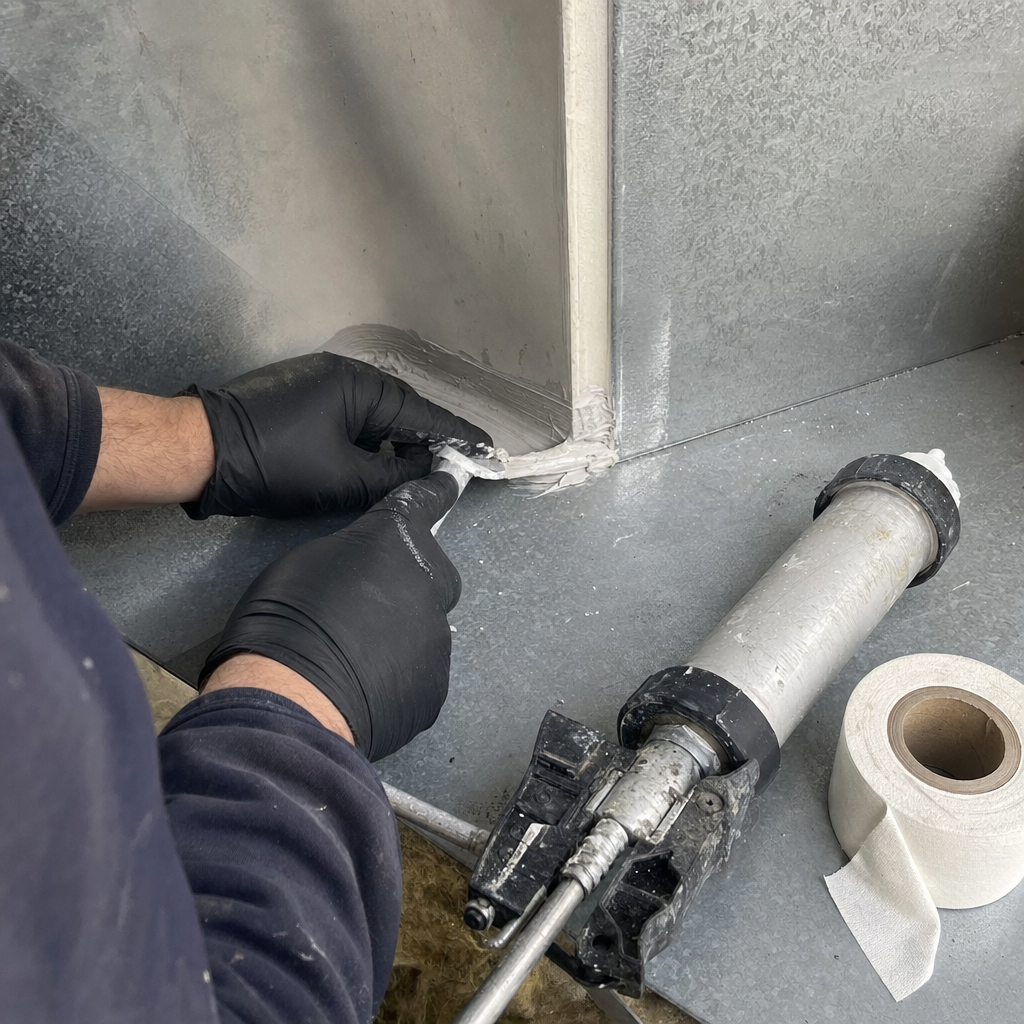
Mastic is our standard recommendation for the rigid galvanized ductwork common in Youngstown’s converted gravity systems. It’s a fiber-reinforced water-based compound we brush onto every joint and seam. It hardens into a permanent seal that outlasts tape by decades. For a typical ranch or two-story with basement trunk lines and 8–12 branch runs, we’re usually done in four to six hours.
Metal-backed foil tape has its place, but we’re cautious with it. We’ve peeled off failed tape jobs in homes on the South Side where the adhesive degraded from condensation cycling. Tape alone is rarely the right answer in this climate.
Aeroseal makes sense when a blower-door or duct-blaster test shows system-wide leakage above 20% — common in homes where flexible duct was added during a 1990s renovation and has since detached at multiple collars. The process seals from the inside by pressurizing the system with aerosolized sealant particles that bond at leak points. It’s effective but costs more, and we only recommend it when the numbers justify it.
Our Duct Repair & Sealing page covers the full scope of repair work beyond sealing, including trunk line modifications and branch run replacements.
What Duct Sealing Actually Fixes — And What It Won’t
We’re direct about this because we’ve seen the disappointment when expectations don’t match reality. Duct sealing reduces conditioned-air loss through leaks and gaps. It can lower your energy bills if leakage was significant. It stops heated or cooled air from escaping into unconditioned spaces like basements, crawl spaces, or wall cavities.
What it won’t do: correct a fundamentally undersized branch run. We’ve been in Youngstown homes where a bedroom over a garage never gets warm because the 4-inch branch run was sized for a gravity system, not a modern blower. Sealing every joint perfectly won’t move enough air through that pipe. Mark will tell you that before we start, not after we’ve cashed your check.
The same goes for ductwork that’s structurally failing from corrosion. Lake-effect humidity in uninsulated basement runs — especially in homes that sat vacant through multiple winters, which is common in neighborhoods affected by the Mahoning County Land Bank cycles — can rot through galvanized steel from the inside. Sealing a rusted-through seam is like caulking a sinking boat. When we find that, we quote repair or replacement, not a seal that’ll fail in two seasons.
How We Price a Sealing Job — And Why Estimates Are Free
We don’t quote over the phone for sealing work. The variation in Youngstown’s housing stock is too wide. A 1920s Brier Hill duplex with a mid-century conversion and a 1970s ranch with original flex duct might both need sealing, but the labor and materials differ significantly.
Here’s what Mark assesses during a free estimate visit:
- System type and age — rigid metal, flex duct, or hybrid
- Accessibility of trunk lines and branch connections
- Visible leakage points, corrosion, or structural damage
- Pressure test results if available, or symptoms that suggest leakage patterns
- Whether sealing alone will solve the comfort problem, or if branch sizing or repair is needed
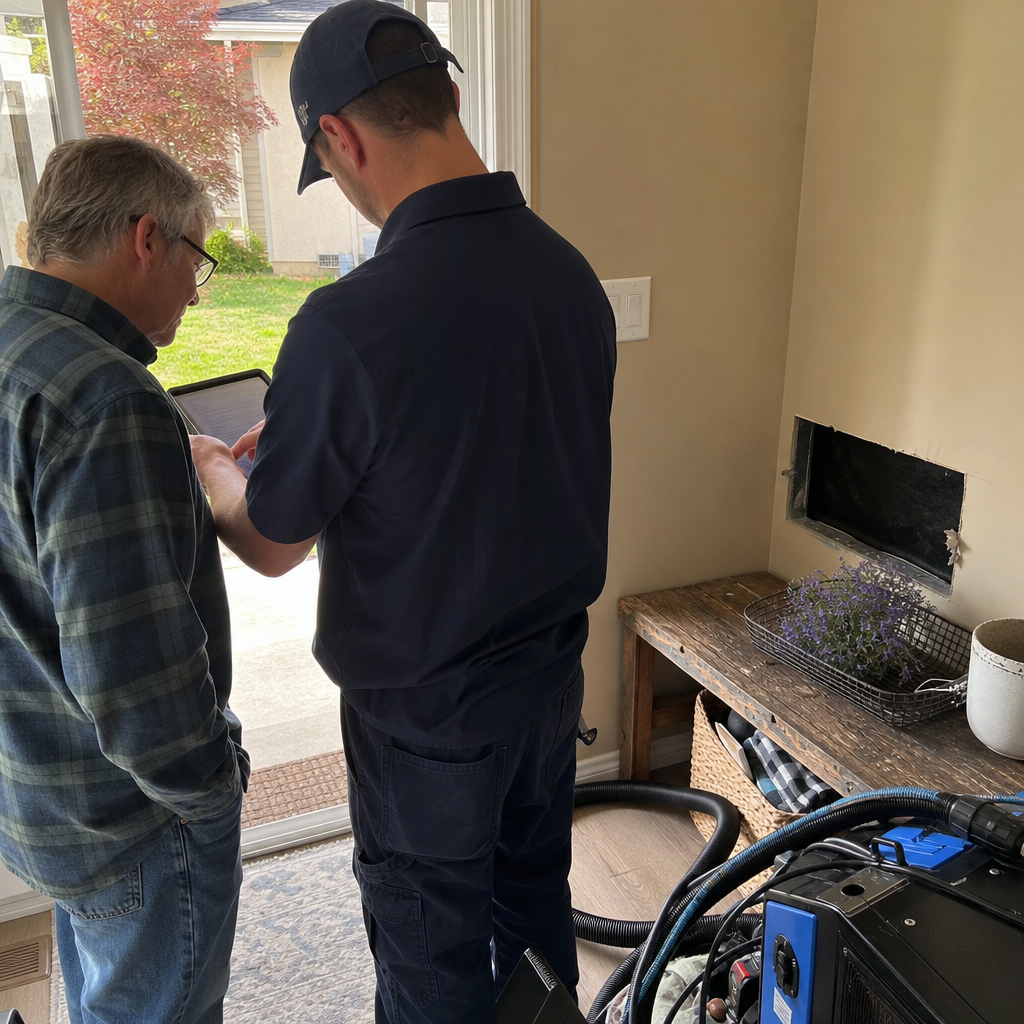
We bring professional-grade equipment to every assessment — Rotobrush inspection systems and Nikro extraction tools, the same gear we use for cleaning jobs. That means the same technician who evaluates your system can identify, access, and seal problem joints in one visit if you choose to proceed. No third-party referrals, no coordination with separate contractors.
Our 661 verified reviews at a 4.8 average reflect this approach: owner on-site, equipment named, work explained before it starts. “If it needs doing, I’ll tell you. If it doesn’t, I’ll tell you that too.”
When Sealing Becomes a Maintenance Issue, Not Just a Comfort Upgrade
Youngstown’s climate pushes ductwork harder than drier markets. We’re about 75 miles from Lake Erie but squarely in the snow belt, with winter humidity that persists for months and freeze-thaw cycles that stress every building component.
In uninsulated basement ductwork — standard in most of the worker housing stock — that humidity condenses on cold metal surfaces during shoulder seasons when the furnace cycles on and off. Over years, that condensation corrodes joints from the inside out. We’ve opened basement trunks in South Side homes where the seam between trunk and branch had rusted to the point that air wasn’t just leaking — it was whistling through a gap you could slide a pencil into.
For homes that went unheated during vacancy periods, common in neighborhoods with Land Bank turnover, the problem accelerates. Cold, humid basements with no air circulation create ideal conditions for mold colonization inside duct seams. Sealing those joints isn’t just about comfort anymore; it’s about stopping a contamination source from spreading spores every time the blower kicks on.
This is why we treat sealing as part of a system evaluation, not an isolated upsell. The same visit where we seal joints, we can assess whether your ductwork needs cleaning, whether corrosion requires repair, and whether your system would benefit from air quality sanitizing. One call covers the full job — no piecemeal contractors.
FAQs
Most duct sealing in Youngstown costs between $350 and $1,200, with mastic sealing of accessible rigid ductwork running $350–$650 and whole-system Aeroseal at $1,000–$1,500+. For a detailed breakdown, see our guide on how much duct repair and sealing costs in Youngstown, OH. The exact price depends on your duct type, accessibility, and whether sealing alone will solve your comfort issue. Call (866) 952-5794 for a free estimate — Mark Thompson handles every assessment personally.
Sealing existing ductwork is almost always cheaper than replacement, but only if the ducts are structurally sound. In Youngstown’s older housing stock, we’ve found corrosion from lake-effect humidity that makes sealing a waste of money — the metal is too far gone. We evaluate this during our free estimate and tell you honestly which path makes financial sense.
Yes, if your system has significant leakage — typically 20% or more of conditioned air escaping into unconditioned spaces. We’ve seen meaningful reductions in homes with converted gravity systems where original joints were never sealed. But sealing won’t fix an undersized branch run or an oversized furnace, and we’ll flag those issues before we quote.
A typical mastic sealing job on accessible basement ductwork takes four to six hours. Aeroseal requires more setup and testing time, usually a full day. We complete most sealing work in a single visit because Mark brings the equipment and does the work himself — no waiting for a separate crew.
Ready for an Honest Assessment of Your Ductwork?
Call (866) 952-5794 to schedule your free estimate. Mark Thompson will evaluate your system, explain what sealing can and can’t do for your specific ductwork, and quote upfront — no pressure, no mystery. Seventeen years and 661 reviews say we show up when we say we will and tell you the truth about what you need.
Written by Mark Thompson, Owner & Lead Technician at Coastal Air Duct & Vent Cleaning Greater Youngstown, serving Youngstown, OH.