
Signs You Need Dryer Vent Cleaning in Youngstown, OH — From Gradual Lint Buildup to Sudden Blockages
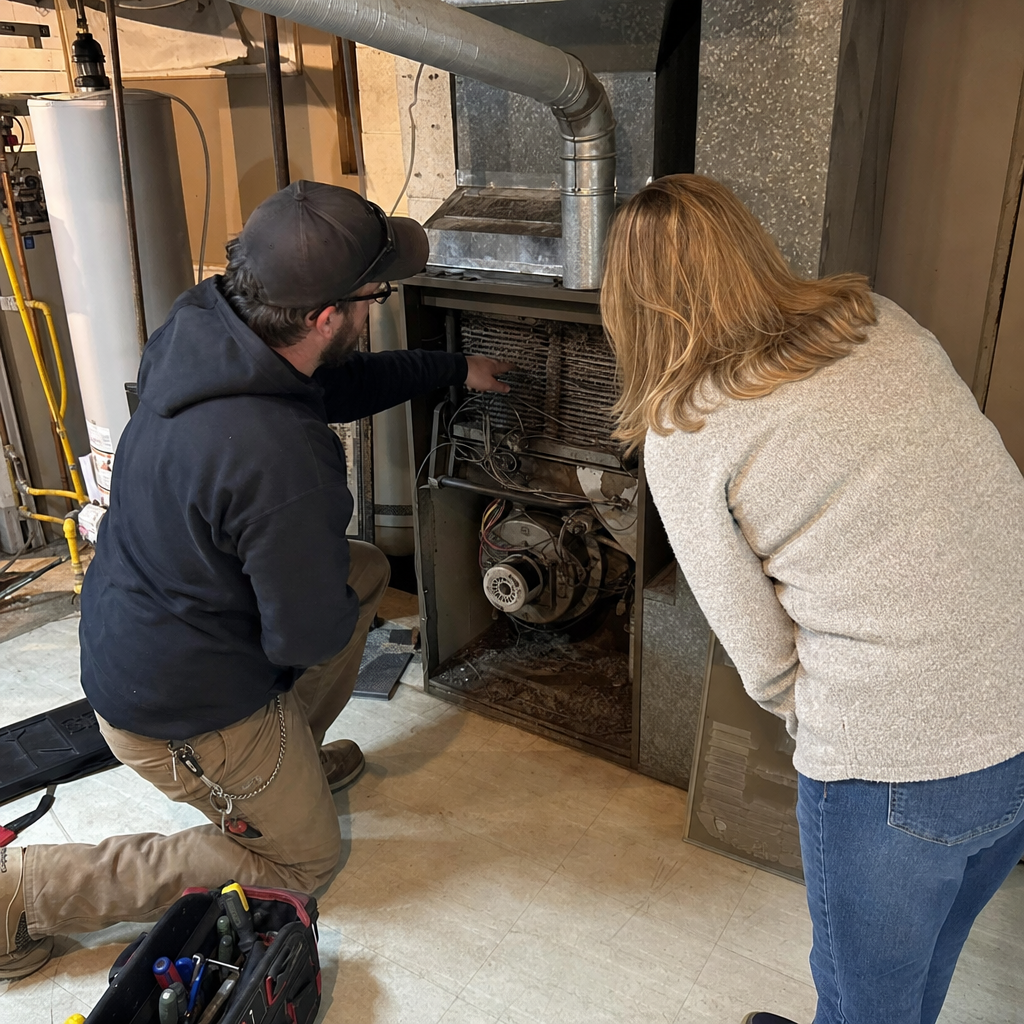
The most reliable signs you need Dryer Vent Cleaning services are extended drying times, a hot laundry room or exterior vent, burning or musty smells, and visible lint accumulation around the exterior cap. In Youngstown, however, there’s a second set of warning signs that standard guides miss entirely: homes that sat vacant through multiple winters — common in our market — can develop sudden, complete blockages from animal nesting material that don’t announce themselves gradually, making immediate professional inspection critical before running the dryer. If you’re seeing any of these indicators, call Coastal Air Duct & Vent Cleaning Greater Youngstown at (866) 952-5794 for a same-day assessment.
How Youngstown’s Housing and Climate Shape Dryer Vent Problems
Youngstown sits about 75 miles from Lake Erie but catches the full force of lake-effect snow and persistent winter humidity. Those freeze-thaw cycles create condensation inside older, uninsulated ductwork — and when a home goes unheated during a vacancy period, that moisture environment becomes ideal for rodents and birds seeking shelter. The exterior vent caps on most of our 1910s–1940s worker housing are simple flapper-style covers that offer minimal resistance to nesting animals.
We’ve worked neighborhoods from Brier Hill to the South Side where Land Bank rehabs or estate-sale flips revealed dryer vents packed with mouse nesting material layered over decades of steel-era coal soot. That’s not a slow lint buildup you can monitor — it’s a sealed pipe that becomes a fire hazard the moment someone plugs in a dryer and runs a cycle without checking airflow first.
The dominant housing stock here was built for steel and manufacturing employees, with ductwork that is original or was converted from coal/oil gravity systems to forced air mid-century. These conversions frequently left soot deposits and undersized duct runs that trap debris and are harder to access with standard cleaning equipment. Mark Thompson, our owner and lead technician, grew up on Youngstown’s West Side and has spent seventeen years navigating these systems — including the original mid-century ductwork that most technicians won’t touch.
Progressive Warning Signs: The Standard Checklist for Occupied Homes
For homes in continuous use, dryer vent problems develop gradually. These are the textbook indicators that lint is accumulating and restricting airflow:
- Loads take longer to dry. A vent in good condition should move a standard load to fully dry in 35–45 minutes. When that stretches to 60 minutes or requires a second cycle, restriction has reached the point where the dryer is working against itself.
- The laundry room feels unusually warm or humid. Heat and moisture that should exit through the vent are backing into the conditioned space.
- Burning smell or musty odor during operation. Lint is highly flammable; a burning smell means it’s overheating somewhere in the system. Musty odors suggest trapped moisture — common in Youngstown’s humid winters.
- Visible lint around the exterior vent cap. If lint is escaping at the termination point, there’s enough backup in the line that some is being forced out with the airflow.
- The exterior vent cap barely opens or flutters weakly. Strong airflow should hold a flapper-style cap fully open during dryer operation.
These signs are useful because they give you time to schedule Affordable Dryer Vent Cleaning in Youngstown, OH before the situation becomes urgent. But they assume a vent that has been in continuous, gradual use — and that’s not the scenario we encounter most often in Youngstown’s vacant and reoccupied properties.
Vacancy-Specific Warning Signs: What Standard Guides Don’t Tell You
Youngstown’s decades of severe population loss since the 1977 steel mill closures left thousands of homes vacant for years or even decades. When these properties re-enter the market — often through the Mahoning County Land Bank, one of the nation’s most active — ductwork routinely contains accumulated contamination rarely seen in stable markets. For dryer vents specifically, the warning signs look different:
- No airflow at the exterior vent on first use. Hold your hand near the vent cap while the dryer runs. You should feel steady, warm airflow. If you feel nothing, or the cap doesn’t move at all, the vent is completely blocked — often by nesting material that accumulated during vacancy.
- Visible debris, straw, or insulation fragments at the vent termination. Birds and mice don’t build neat nests; you’ll often see their construction materials protruding from or around the cap.
- The exterior cap is physically stuck closed. Corrosion, ice damage, or nesting material can seize a flapper mechanism. A cap that won’t open freely is a cap that won’t vent properly.
- Unexplained dryer overheating or automatic shutoff on a “new” appliance. In a recently purchased or renovated home, owners sometimes blame the dryer when the real problem is a vent that hasn’t been cleared since before the vacancy.
The self-check is simple and takes thirty seconds: with the dryer running on high heat, walk outside and hold your hand near the vent cap. Steady, warm airflow means the vent is at least partially open. Nothing, weak fluttering, or a cold cap means stop the dryer and call for inspection before running another cycle. This isn’t a maintenance suggestion — in a vent blocked by nesting material, continuing to run the dryer creates an immediate fire risk.
Why Youngstown’s Older Vent Routing Compounds the Danger
Modern building codes limit dryer vent length and require smooth-wall metal ducting with minimal bends. Youngstown’s older homes often violate both principles: vent runs that snake through multiple floor cavities, use transitional ducting that’s corrugated and lint-trapping, or terminate in locations that made sense for 1950s construction but create maintenance nightmares now.
A longer, more convoluted vent run means:
- More surface area for lint accumulation
- More junction points where nesting material can lodge
- Reduced airflow velocity that can’t self-clear minor obstructions
- Higher operating temperatures as the dryer works harder to push air through restriction
The national statistic is worth stating in concrete terms: dryer fires account for roughly 15,000 house fires annually. In Youngstown’s housing stock, with vent routing that often exceeds modern code allowances and vacancy histories that introduce non-lint blockages, that baseline risk is compounded. We’ve pulled nests from vents that would have overheated on the first cycle if the homeowner hadn’t thought to check airflow.
What Professional Dryer Vent Cleaning Involves — and What It Costs in Youngstown
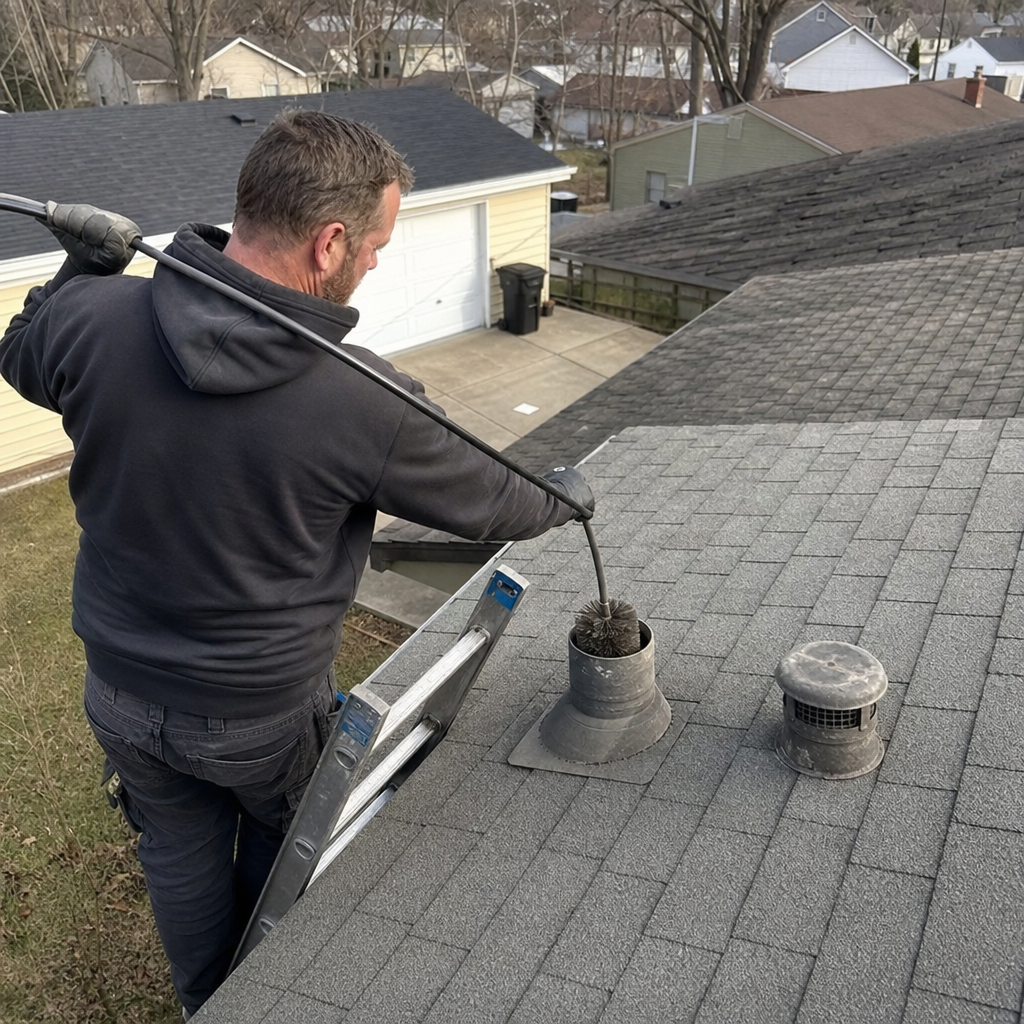
When Mark Thompson arrives on a Best Dryer Vent Cleaning in Youngstown, OH job, he’s not running a shop vacuum from the laundry room. We use professional-grade equipment — Rotobrush mechanical agitation systems and Nikro high-velocity extraction — to clean the full vent run from the dryer connection to the exterior termination. For vents with heavy nesting debris or soot contamination, we’ll also deploy Abatement Technologies HEPA air filtration to prevent that material from circulating into your living space during the process.
Our Dryer Vent Cleaning in Youngstown service includes inspection of the vent cap and termination point, full mechanical cleaning of the duct run, airflow verification before and after, and a straightforward report of what we found. If the vent routing is damaged, disconnected, or violates modern safety standards, we’ll show you exactly what needs repair — no upsell pressure, no mystery.
Dryer Vent Cleaning Pricing in Youngstown
| Service | Typical Range | What Affects Cost |
|---|---|---|
| Standard dryer vent cleaning (single-story, direct vent) | $120 – $180 | Vent length, accessibility, degree of lint buildup |
| Multi-story or extended vent run cleaning | $180 – $280 | Additional length, bends, roof or attic termination |
| Vent with animal nesting removal and sanitizing | $200 – $340 | Extent of nesting, need for cap repair/replacement, HEPA containment |
| Vent repair, rerouting, or code-compliant replacement | $250 – $550+ | Materials, labor, accessibility, extent of existing damage |
These ranges reflect what we’ve quoted in Youngstown over our seventeen years of operation. Every job gets an upfront, no-surprise estimate before work begins — call (866) 952-5794 and we’ll give you a firm quote based on your specific vent configuration.
How Dryer Vent Cleaning Compares to Replacement — and When Each Makes Sense
Homeowners often ask whether cleaning is sufficient or if the vent should be replaced entirely. Here’s how we evaluate that on site:
Cleaning is typically sufficient when: The vent is intact metal or smooth-wall ducting, properly supported, with no holes or separations; the blockage is lint or nesting material that can be fully extracted; the termination point is accessible and the cap is functional or easily replaceable; and airflow tests within acceptable range after cleaning.
Replacement becomes necessary when: The ducting is corrugated plastic or foil transition duct (a fire hazard regardless of cleanliness); there are multiple separations or holes that can’t be properly sealed; the vent run exceeds 35 feet equivalent length with bends and can’t be rerouted shorter; or the termination point is dangerous — such as venting into an attic, crawlspace, or wall cavity, which we’ve found in some of Youngstown’s older conversions.
Mark Thompson handles your job personally — owner on-site, every time. That means you get seventeen years of field judgment applied to whether your vent genuinely needs replacement or just thorough cleaning. As he’s known to say: “If it needs doing, I’ll tell you. If it doesn’t, I’ll tell you that too.”
What to Expect When You Call Coastal Air Duct & Vent Cleaning Greater Youngstown
We’ve built our reputation on being straight with people — 661 verified reviews averaging 4.8 stars represent one of the deepest review records in the local duct cleaning category, and they reflect a consistent theme: Mark shows up when he says he will, explains what he found, and doesn’t invent problems.
On a dryer vent call, you can expect:
- Mark Thompson at your door, not a subcontracted crew
- Rotobrush and Nikro professional-grade equipment, not box-store tools
- Before-and-after airflow measurement you can see
- Photo documentation of what came out of your vent
- Clear explanation of whether your vent routing meets modern safety standards
- One-call completion — cleaning, repair, sealing, or sanitizing as needed, no third-party referrals
From cleaning to repair to sealing — one call covers the full job. Seventeen years, 661 reviews — the track record speaks for itself.
Key Takeaways: When to Schedule Dryer Vent Cleaning in Youngstown
- Occupied home, gradual symptoms: Extended dry times, hot laundry room, burning smell, or weak exterior airflow — schedule cleaning within days, don’t wait for “convenient timing.”
- Reoccupied home, vacancy history: No airflow at exterior cap, visible nesting debris, stuck flapper, or unknown vent condition — stop using the dryer and call for immediate inspection before first full cycle.
- Self-check takes 30 seconds: Hand at exterior vent while dryer runs. Steady warm airflow = functional. Nothing or cold cap = blockage. No exceptions.
- Youngstown’s older housing stock increases risk: Longer vent runs, corrugated legacy ducting, and vacancy-related nesting make professional-grade cleaning and inspection more critical than in newer construction markets.
FAQs
How Much Does Dryer Vent Cleaning Cost? (2026 Price Guide) — Youngstown, OH: Standard dryer vent cleaning in Youngstown typically runs $120–$180 for single-story homes with direct exterior vents, while multi-story or extended runs range $180–$280, and vents requiring animal nesting removal run $200–$340. Call (866) 952-5794 for an exact quote based on your vent configuration — estimates are free.
Repair is cheaper when the ducting is intact smooth-wall metal with accessible damage; replacement is necessary when the vent uses corrugated plastic or foil transition duct, exceeds safe length limits, or terminates in an enclosed space like an attic or wall cavity. We’ll show you exactly what you have and give you both options with firm pricing.
Yes — we prioritize blocked vents as same-day calls because running a dryer against a complete blockage creates immediate fire risk. Call (866) 952-5794 and we’ll get Mark Thompson out with Rotobrush and Nikro equipment to clear the obstruction and verify safe airflow before you resume normal use.
Check airflow at the exterior vent cap while the dryer runs on high heat — steady warm airflow means the vent is functional and the problem likely lies in the dryer’s heating element or controls; no airflow or weak fluttering means the vent is blocked and the dryer is working against dangerous restriction. This thirty-second test saves you from misdiagnosing a vent problem as an appliance failure.
If you’d rather have it looked at, Coastal Air Duct & Vent Cleaning Greater Youngstown offers a no-pressure assessment in Youngstown — call (866) 952-5794 for a free estimate and same-day scheduling.
Written by Mark Thompson, Owner & Lead Technician at Coastal Air Duct & Vent Cleaning Greater Youngstown, serving Youngstown, OH.